
Last Frontier Tales
Death of a Bully
By Hank Nuwer, Cordova Times
Norman E. Smith was a big and brawny Alaska businessman who liked to throw his considerable weight around.
He was born in Veazio, Maine, on February 28, 1873. A few newspaper articles about the time he was 17 years old note that in just a year’s time he had become a local champion in bicycle riding events. He also worked in the logging industry as a boom house worker, climbing deftly from log to log to determine their ownership.
While still a young man, he moved to Alaska and labored as an explorer for White Pass and Yukon Railway. Later, in 1900, he participated as a promoter in a business scheme that would have built a railway from the gold fields of Nome to Katmai over the old. Katmai Trail.
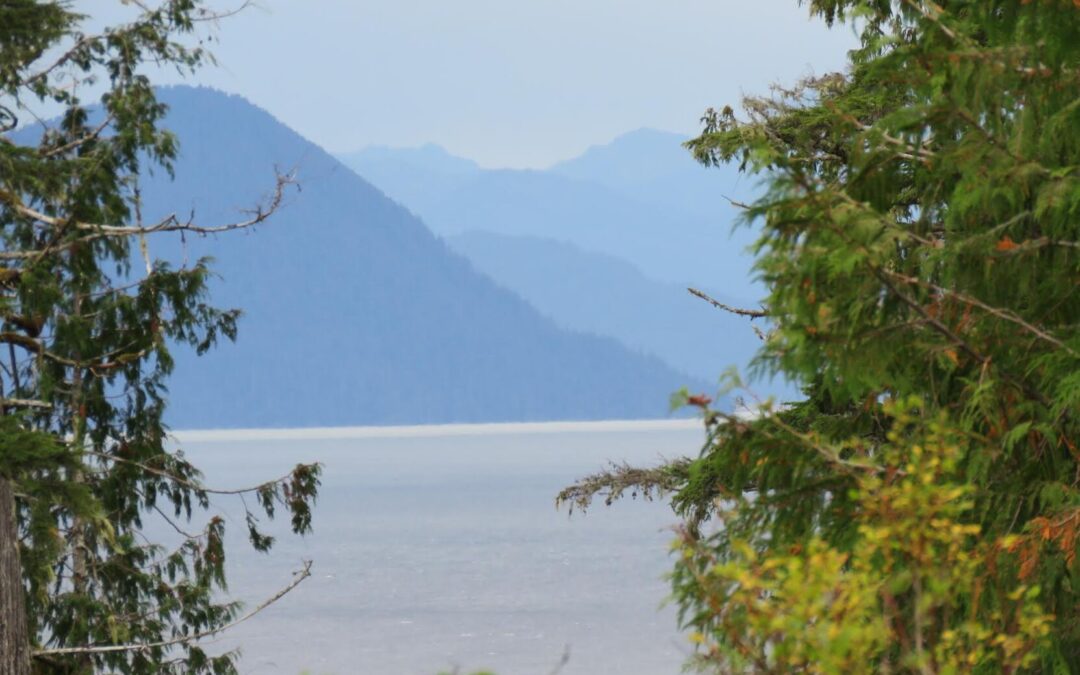
Smith settled finally in Tanakee in the Hoonah-Angoon Census area famed for its hot springs, excellent trout fishing, and an abundance of ptarmigan, grouse, ducks and wild geese.
Newspaper articles described Smith as a rugged man with the physique of a giant. The Stroller’s Weekly and Douglas Island News said he was a clever fellow, the equal of any mentally.
The Tanakee and Hoonah area then enjoyed prosperous times. Tanakee boasted a two-story hotel, an elegant bath-house for hot-springs patrons, a post office and a large store owned by prosperous businessman Ed Snyder, according to The Stroller’s Weekly and Douglas Island News. Snyder, easily one of the area’s most solid citizens, also owned a string of tourist cottages with a launch for arrivals by steamer.
Unfortunately, Smith was known locally to be a bully. “We do not mean that he was wholly bad; we do not believe in the doctrine of total depravity,” observed The Stroller’s Weekly.
Smith’s favorite target to bully was an itinerant miner and trapper named Robert (Bob) Reid. The exact circumstances that stoked Smith’s derision for Reid are unknown.
The Alaska Prospector of Valdez speculated that somehow the two clashed over Reid’s beloved dog. The Daily Alaskan thought Smith was peeved because Reid would not give him half of a shipment of beer that Reid had taken off a sunken vessel. Still another theory in the news was that Smith was furious because Reid and Snyder had tried to block his application for a liquor license.
Nonetheless, Smith opened and ran the Bay View Saloon at Tenakee.
Whatever the cause of his enmity, Smith took it upon himself to terrorize Reid. On several occasions, he threatened to kill Reid and Snyder.
Smith once kicked in the front door of Reid’s cabin, but Reid was away at the time. This may have been Smith’s failed attempt to kill Reid, reported by The Daily Alaskan of Skagway.
Afraid to return home, Reid moved in with Snyder.
On November 3, 1906, after relaxing in the baths, Smith, wearing a long overcoat, entered the front door of Snyder’s Mercantile.
Fearing an attack, Reid ran into a back room of the store and emerged with a double-barreled shotgun.
The confrontation was quick and deadly. One blast from Reid’s weapon hit Smith in the face, sending the giant’s body to the floor. Reid stood over Smith and fired a load of buckshot from close range.
After an inquest, district attorney J.J. Boyce charged Reid with murder. Smith’s father and sister traveled from Maine to attend the trial in district court. Tom Lyons of the law firm Shackleford and Lyons prepared a case that claimed Reid fired out of fear for his life. At least 66 citizens signed a friend-of-the-court document testifying to their belief in Reid’s character.
Snyder was the defense’s main witness, having seen the entire episode. He testified that Smith’s threats had caused Reid anguish and fear.
Following testimony and closing arguments, the jury conferred for 40 hours. On May 4, 1907, the foreman informed the court that the jury stood 11 votes for acquittal and one for conviction.
The Daily Alaskan’s headline on May 6 read: “GOES FREE: Robert Reid Acquitted of Murder.”
Hank Nuwer is an adjunct professor at the University of Alaska. Photo by Malgorzata (Gosia) Nuwer