
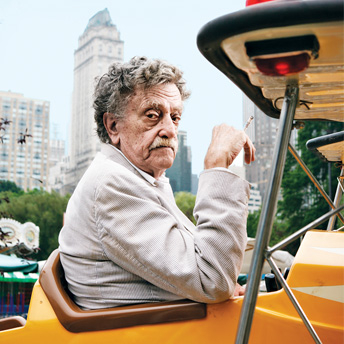
The major headlines surrounding Kurt Vonnegut involve his estate launching a high-profile federal lawsuit against book banning and Purdue University purchasing his museum and library to secure its long-term future. [1, 2]
The Vonnegut v. Utah Federal Lawsuit
The primary news regarding Vonnegut’s legacy is the legal battle over censorship.
- The Lawsuit : The ACLU of Utah filed a major federal lawsuit, Vonnegut v. Utah , on behalf of the Kurt Vonnegut Estate, several other authors, and public school students. [1]
- The Core Conflict : While Vonnegut’s classic 1969 novel Slaughterhouse-Five has been targeted and removed by some schools under this law, his daughter, Nanette Vonnegut, publically condemned the bans. She stated that blocking access to books denies young people the freedom to think and grow, directly contradicting what her father fought for in World War II. [1, 2]
Purdue University’s Acquisition of the Vonnegut Museum
The physical preservation of Vonnegut’s history made news due to a major institutional acquisition. [1]
- The Purchase : Purdue University announced a $1.9 million deal to buy the 10,400-square-foot Kurt Vonnegut Museum and Library building on Indiana Avenue in downtown Indianapolis. [1, 2]
- The Future Plan : The acquisition is a part of Purdue’s campus expansion. While the nonprofit museum will continue to operate independently as a tenant, Purdue will use the collaboration to enrich its museum studies program and provide student workshops and events. The partnership relieves the museum of major logistical and financial burdens, allowing it to safely execute its long-term strategic plans.Hank Nuwer’s relationship with Kurt Vonnegut spans several decades, transitioning from a notable 1980s literary interview into a comprehensive, career-defining scholarly biography project . Nuwer, a veteran journalist and adjunct professor of journalism at the University of Alaska Fairbanks , is currently writing Kurt Vonnegut: The Man in the Hole. A Life of Reinvention . He frequently shares deep-dive excerpts, historical discoveries, and critical commentary regarding the iconic author. [1, 2, 3, 4, 5]

 1. The Original InterviewNuwer first established a direct connection with Vonnegut during the 1980s. He conducted a highly cited interview with the author around the release of Vonnegut’s fourteenth novel, Galápagos . The transcript of this conversation has since been preserved in various literary anthologies and interview collections . [1, 2]2. Current Biography Project: “The Man in the Hole”Nuwer is deeply immersed in an unauthorized but rigorously researched biography titled Kurt Vonnegut: The Man in the Hole . He regularly updates his findings and publishes biographical chapters on his website, Realalaskadaily , and in his regular columns for the Cordova Times . [1]Through deep archival research and original investigative scholarship, Nuwer has brought several fresh, lesser-known insights to light: [1]
- Real-Life Inspirations: In August 2026, Nuwer published findings tracing the character of “Wild Bob” from Slaughterhouse-Five to William J. Garlow, the real-life grandson of Buffalo Bill Cody who served in the 106th Infantry Division during the Battle of the Bulge. [1]
- Family History Records: His research into German archival databases uncovered registered Nazi Party memberships belonging to three of Vonnegut’s extended relatives (including his uncle Rudolph Lieber and the husband of his aunt Irma), adding context to Vonnegut’s family dynamics during World War II. [1]
- Investigating Personal Tragedies: Nuwer has re-examined complex chapters of Vonnegut’s personal life, such as analyzing the official death certificate and coroner records of Vonnegut’s mother, Edith Sophia Lieber Vonnegut, to cross-reference the author’s lifelong claims of her suicide. [1]
3. Biographical Commentary and CritiquesAs a Vonnegut scholar, Nuwer actively evaluates how the author’s legacy is handled by the literary community. He has written detailed critiques of previous mainstream works—most notably Charles J. Shields’ widely read biography, And So It Goes . While Nuwer commends Shields’ editorial perspectives, he has published extensive fact-checks correcting numerous geographical, historical, and genealogical errors found within that text. [1, 2]