
As an adult and published essayist, Kay’s nonfiction and interviews with the press frequently refer to his family’s diminished financial circumstances during the Great Depression.
During the summer of 1942, Kay wrote in his Sun column that he had worked for a mere 17 cents an hour as a laborer on the 900-acre Indiana dairy farm of Daniel Glossbrenner. He worked at the Rainbow Farms homestead alongside two teenagers, two old timers, and a Mr. Bloomer, who Kay insisted in a Sun column, “possessed the IQ of a small dog.” Kay milked cows, fed livestock, and shoveled manure out of stalls. [The Sun, October 22, 1942]
Despite his supposed mental incapacity, Mr. Bloomer was cagy enough to quit the farm and found work for “over fifty dollars a week at Allison Engines.”
Kurt Vonnegut resurrected Mr. Bloomer while writing a story called “Basic Training” in the 1940s—before Kurt found success as a short story writer with Collier’s and The Saturday Evening Post.
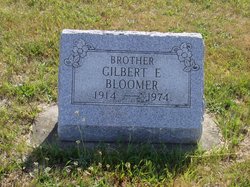
I couldn’t resist looking up Mr. Bloomer who in fact was a rather strange man named Gilbert Earl Bloomer. He was born in Tippecanoe County, Indiana, on September 13, 1914, the son of Willard and Nora Bloomer. They had at least nine children, according to the 1920 U.S. Census, and Gilbert was five years old.. Willard was nearly a quarter century older than Nora Bloomer.
But in the 1930 Census, Gilbert, 15, was listed as an “orphan boy,” living in Porter, Indiana with the family of Arthur and Phoebe Strong. In 1934, his brother, Willard Jr., also died. Gilbert was living with his brother Wayne in Indianapolis, according to Willard’s obituary.
Gilbert surfaced again in 1936. The Anderson Independent of January 11, 1936, reported that Bloomer had bopped John Wooten in the head with a milk bottle while attempting to rob him. Anderson patrolman Frank Delatore collared Bloomer, charging him with robbery, assault and battery, and resisting arrest. Police told the newspaper that as far as they knew, Bloomer had no previous criminal record.
He never married and died June 15, 1974, at age 59 in a LaFountaine nursing home where he had resided for some time. Four sisters and three brothers survived him. He was buried in the IOOF cemetery in LaFountaine, Indiana.
Unknown to Kay, Gilbert Earl Bloomer got himself involved in a predicament before that summer of ’42 when he made a fuss at a local draft board office, saying he didn’t want to “get pulled into that (censored) army.”
I found this in an article for The Tipton Daily Tribune titled “He Joined Up: Mr. Bloomer may like the Army After a Time,” February 14, 1942.
Informed that he had ignored earlier induction notices, Mr. Bloomer pledged to “straighten things out.” A draft board member and the board clerk became nonplussed when Mr. Bloomer started making annoying noises and rolling his eyes.
“The army isn’t ever going to take me,” he vowed just before a policeman arrived to calm him down.
Kay’s title for the Cornell Daily Sun column on Mr. Bloomer was “How’re You Going to Keep ‘Em Down on the Farm, After They’ve Seen Lockheed?” It anticipated his later published comic titles such as “Yes, We Have No Nirvanas,” in which he creatively reworded a song title, “Yes, We Have No Bananas.”
His comic presentation and stereotyping aside, Kay then wrote about the need to improve working conditions on farms. He foresaw the demise of the Hoosier family farms during the twentieth century. In fact, after Daniel Glossbrenner died at 87 in 1983, his beloved Rainbow Farms was broken into parcels and sold for development by Daniel I Glossbrenner, Jr., his son.