
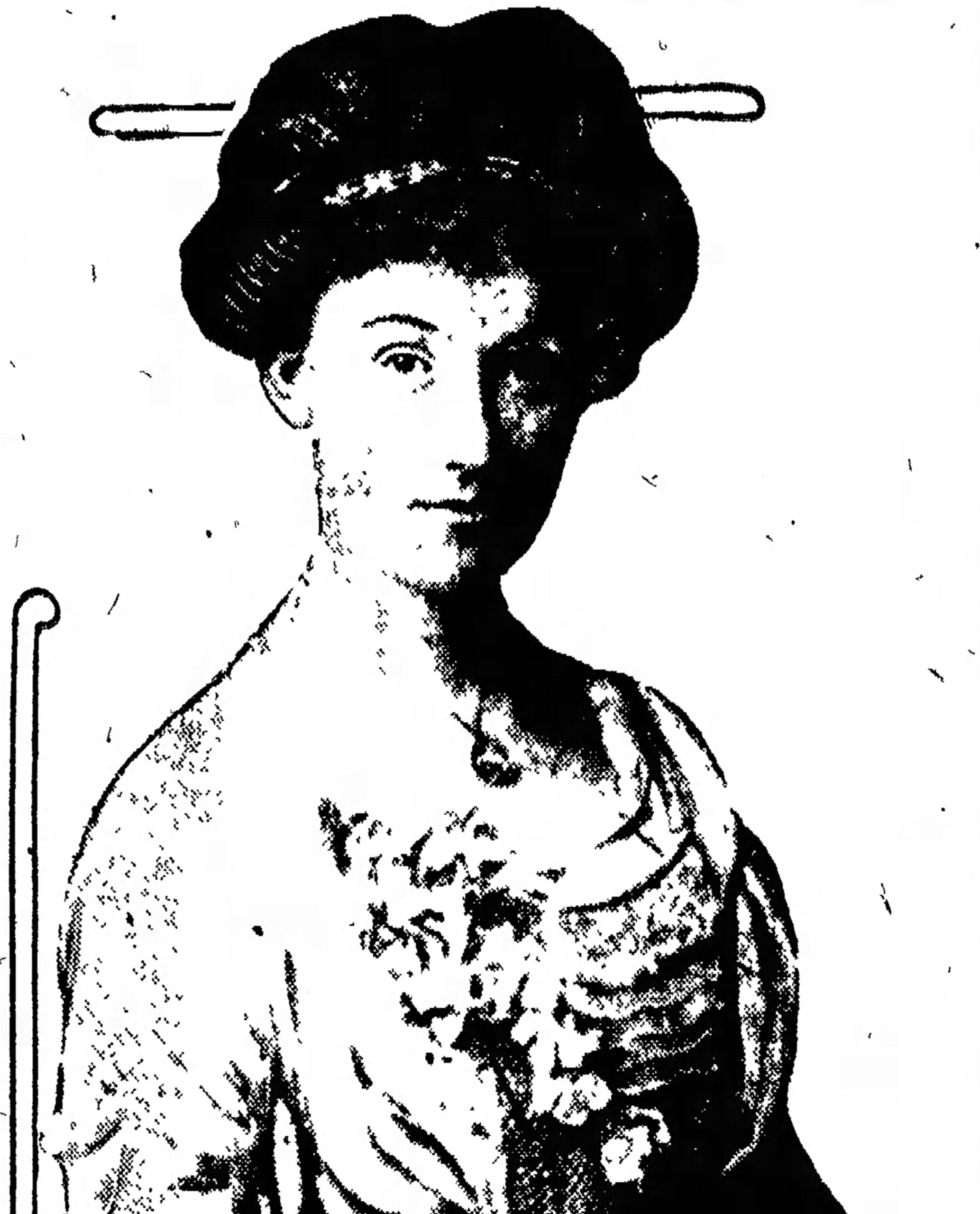
Excerpt, “No Checks in the Mail,” Information taken from “Kurt Vonnegut: The Man in the Hole. A Life of Reinvention.” In-progress biography of Kurt Vonnegut, Jr. by Hank Nuwer
Hank Nuwer, adjunct professor of journalism, University of Alaska, Fairbanks
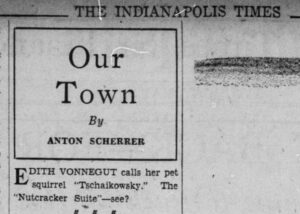 1936, Indianapolis Times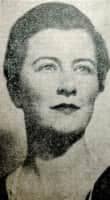
Kay observed his mother spending hour upon hour at her bedroom desk. Her polished nails tapped the typewriter keys as she converted her memories of a thrilling, rich girlhood into short stories. He watched as she read, or rather as she studied, the slicks like McCall’s, Ladies Home Journal, and The Saturday Evening Post, hoping to catch the magic formula that created the kind of fiction editors wanted. Service “how-to” magazines for would-be writers overflowed her magazine rack.
Perhaps his mommy could become another Elswyth Thane, whose historical romances thrilled Liberty magazine readers and captured the hearts of book club subscribers. Thane had transformed herself from plain, drab Helen Ricker of Iowa into a glamorous literary celebrity married to the world-famous naturalist William Beebe. Newspapers followed the couple’s expeditions across England, Bermuda, Trinidad and beyond while Thane set her bestselling romances in the exotic places they visited, and mercy, Beebe was said to be twice her age.
Certainly, Kurt’s mother once led as romantic a life as this Thane now did. As he thumbed through Edith’s photo albums, he visualized the unforgettable life adventures she experienced in Germany, England and France. Her onetime German fiancé rivaled any manly soldier hero in the pulp fiction tales. As Kurt grew older, he came to understand that his mother’s life of privilege ended after financial setbacks. On days when her emotions flared, she mourned her youth when her brewer father gifted her anything she requested.
Surely, one day an editor would recognize his mother’s genius, her fictive voice, her talent. Should she byline her articles as Edith Lieber or Edith Vonnegut? Maybe the byline should be a memorable pseudonym like Elswyth Thane, the name selected by once unknown Helen Ricker of Iowa after settling in New York right after high school graduation.
He watched her continue typing, now and then tearing a half-filled page and crumpling it into starter fuel for the fireplace. He saw her take completed pages out of the roller and stack them until her story ended. Then she counted the words and put the number of words into the left hand corner of her cover letters.
But every story she dropped into the mail—each accompanied by a self-addressed envelope with the proper postage—came back to her. She could have stuffed a desk drawer with editorial rejection slips, just as her son gather from publishers after returning from the Army. If she sold one, what a tale she would have to tell at the next Portfolio dinner. Now and then, Kay must have beaten his mother to the mailbox, and he must have had to walk into her study to see her disappointment over the returned mail in his hands.
Inevitably, she sighed and return to typing.
Kay never mocked her ambitions. He read the next story and then the next, peering over her shoulder, admiring her resilience, seeing how she wouldn’t give up, just kept at it in the belief the next story might see print. Years later, after Jane came back inside the house with return envelopes, he would understand how the sting of rejection slips hurt his mother. As always, he closed that memory of his mother’s failure to succeed as an author with a joke. Fortunately, he had vulgarity aplenty and would survive his bare-knuckle bouts with resistant editors.
“She failed because she was too polite. She was a very good writer, it turned out, but she lacked the vulgarity necessary for publication,” he observed in Palm Sunday: An autobiographical Collage.” She had class, and class is an anchor for anyone who wants to write a popular story.”
Her son Kay supported her efforts and gave her hope, false or true, from kindness or faith, that she would sell her stories, just as his wife Jane would give him encouragement when he had his own stack of unsold stories, each stuffed in G.E. folders carrying dates scribbled in his own hand. Always there would be Jane, a Muse if ever there was one, peering over his shoulder as he swatted the typewriter keys.
Unfortunately, the fat checks such as those Kurt Vonnegut Jr. eventually would cash would forever elude his mother.
My scholarly book also departs from “And So It Goes” in approach. I have taken years to find public documents and publications and lectures where I found Kurt Vonnegut’s words. His letters in books edited by Dan Wakefield and daughter Edie Vonnegut were important. Charles J. Shields conducted many memorable interviews. I respect his diligence even as I disagree with some of his conclusions in the biography. (He has declined to be interviewed for my book, and I respect his wish).
I conducted fewer interviews and concentrated on getting the facts right. I spoke in person only twice with Mr. Vonnegut. Based on those two conversations and years of research, I believe my scholarly biography will present a balanced portrait of Kurt Vonnegut. I still have work to do. Fans of Kurt Vonnegut still can help out by sending any letters, new material, corrections (including from “And So It Goes” or other Vonnegut books), or personal recollections to me at Hank Nuwer, PO Box 73446, Fairbanks, AK 99707. I still have interviews to do, and if readers have benefitted from my hazing work, etc., they are free to send donations with my thanks.