
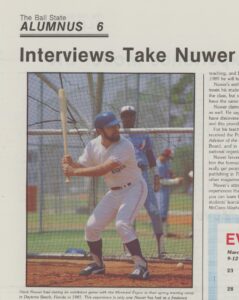
Hank Nuwer at Bat
The Boy of Summer: First published in the Cordova Times
By Hank Nuwer
I grow excited each year as baseball spring training reports from Florida and Arizona announce the coming of a new season.
My father only watched boxing matches on TV. I curled beside him watching my early heroes trade gloved punches on Gillette Friday Night Fights.
Legendary boxers back then were Sugar Ray Robinson, Rocky Marciano, and Jersey Joe Walcott. I knew their colorful nicknames as sure as my own: Butch, for my grasscutter haircut.
At age 11, I rode my second-hand Roadmaster bike to visit my uncle in midtown Buffalo. He was watching Game One of the ’57 World Series pitting the Milwaukee Braves against the New York Yankees.
He sat on his davenport and pointed to the TV set. “That’s Warren Spahn,” Uncle Ed said. “He’s a South Buffalo boy.”
That day the South Buffalo boy with an impressive schnozz and exaggerated leg kick tried his best for the Braves, but Edward Ford, a short, handsome Yankee with the nickname “Whitey,” bested him in Game One.
I couldn’t get enough baseball ever after. I collected colorful Topps cards. I learned how to play and studied a rulebook meant for umpires. I made new friends at school who played ball on a cinder field even when the first snow fell. I haunted Novak’s drugstore to read all the baseball articles in Sport magazine.
The next year I followed the community-owned Buffalo Bisons on the radio all spring training. Bill “The A-Maze-IN” Mazer narrated the games so smoothly that I didn’t know he was reading updates off a teletype machine. In between pitches, Mazer shared baseball lore and trivia. I gobbled every word.
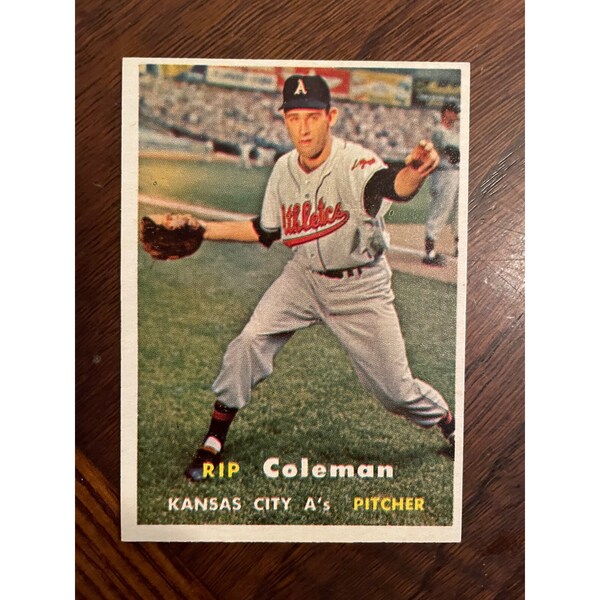
Naturally, I went to several weekend Bison games at ancient Offermann Stadium that ’58 season. The team stunk, I guess, finishing near the bottom of the International League with a 69-83 record, but no matter, I idolized the Bisons. My new heroes were a slugging first baseman named Luke Easter and a tall, lean fastball pitcher named Rip Coleman.
This Coleman had a reputation as a hothead. During a brief career with the Yankees, his manager came to the mound to replace him. Furious, he turned and whipped the ball as far as he could into center field. Before that he’d been a hot prospect, but that impulse soured manager Casey Stengel on him. Now Rip was in Buffalo, hoping to earn his way back into the Big Leagues.
Through some all-boy grapevine I learned a magic secret about Offermann Stadium. Behind an unused concessions stand was a doorless opening that led to a small room overlooking a corridor that stretched from one dugout to the players’ clubhouse. Only meshed chicken wire separated me from my heroes. I dubbed it the magic cave.
While my friends watched the games from their seats, I got into the habit of slipping into the tiny cavity and watching the players talk while they inhaled smokes—a fact that was like me being let in on a wonderful secret of manhood. I carried my transistor radio with me so I didn’t miss a Luke Easter home run.
Rarely, but occasionally, the players spoke to me, particularly while leaving the field after a game.
“You’re not supposed to be there, are you kid?” asked Joe Altobelli, a visiting player from Indianapolis.
“No, sir,” I admitted.
Then one afternoon, my hero Rip Coleman had a terrible game. As he handed over the ball to his replacement, I ran from my seat to the forbidden cave to watch his disgrace.
He had a jacket draped over one sleeve as he left the dugout steps and stomped through the corridor.
“You’ll get them next time, Rip,” I said.
He hurled his baseball glove at my face, and it bounced off the chicken wire an inch from my nose. He screamed profanities as players hurried from the dugout to learn what caused his fury.
Shaken, I turned and ran out of the cave. I rejoined my friends in their seats and choked back tears as I told them of my disgrace.
The next game I attended, I found the entry to the magic cave blocked. I don’t know for sure if it was that meltdown by Coleman that led the team to seal the magic opening, but I assumed then it was so.
My life’s destiny turned out to be writing. I wrote thousands of articles for magazines and newspapers, including assignments for Sport, the magazine I’d revered in that long-ago Buffalo drugstore.
In 1981, the Buffalo Courier Express assigned me a story about Warren Spahn’s life in retirement. He and I spoke by phone. After I drove out to his ranch in Oklahoma, my uncle’s hero from South Buffalo refused to give an interview or to offer an explanation.
However, Whitey Ford became the commissioner of the American Slo-Pitch League. He consented to an interview for an AARP magazine feature story. He asked me to be referred to as Edward, not Whitey. A cordial man, Ford suggested that I interview slugger Joe Pepitone as a second source for the story. He gave me Pepitone’s private telephone number.
Then in 1981, as a participatory journalist, I worked out for days and played two games in spring training for the Denver Bears, a farm team of the Montral Expos. I learned firsthand the challenges of playing professional baseball. One of my teammates was Terry Francona, and in 2026, he’s the manager of the Cincinnati Reds with hopes of restoring the team to onetime glory.
I hadn’t thought about Rip Coleman in a half-century. Luke Easter died at the hands of a holdup man. But what about Walter Gary Coleman?
I looked him up online. Rip Coleman retired from baseball in 1962. Mostly he toiled in the minor leagues. He won seven games and lost 25 in the majors.
An online bio said that Rip Coleman in retirement became a hero to youth in his hometown of Troy, New York. He was a fixture at sports banquets as a speaker.
It was nice to learn he’d matured. His temper derailed what might have been a fine career in baseball.
However, I can’t erase the remembrance of Rip Coleman, spittle on his lips and teammates holding him back, as I ran terrified from the magic cave.
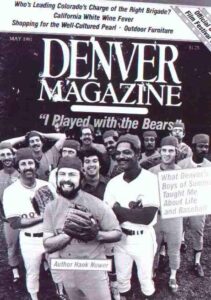
- The Denver Bears (then a minor-league affiliate for the Montreal Expos)
- The legendary, historic Indianapolis Clowns
- The New York Mutuals vintage baseball club, playing in a special game at the Cooperstown Hall of Fame against a team of local athletes led by MLB legend Ozzie Smith. [1].
 Hank Nuwer and Denver Bears manager Felipe Alou
-
 Hank Nuwer takes pregame batting practice against Eric Miklich, Cooperstowm Hall of Fame
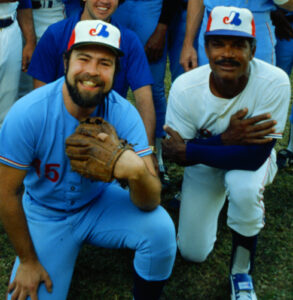 Hank Nuwer and Denver Bears manager Felipe Alou
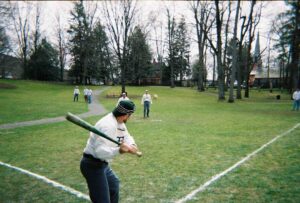 Hank Nuwer takes pregame batting practice against Eric Miklich, Cooperstowm Hall of Fame
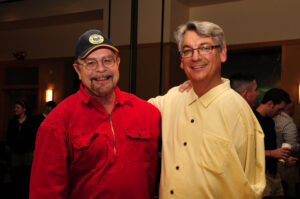 Hank Nuwer (l) shares alaska king salmon fishing stoties with Dave Dravecky.
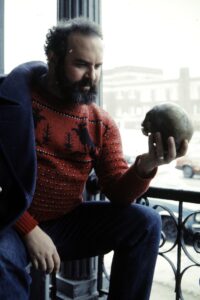 Stuart Gordon, Chicago’s Organic Theater, Bleacher Bums, photo and interview by Hank Nuwer
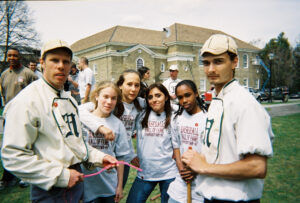 New York Mutuals Eric Miklich, pitcher (left), Cooperstown, NY
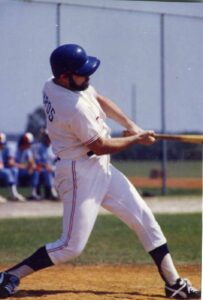 Hank Nuwer, Denver Bears
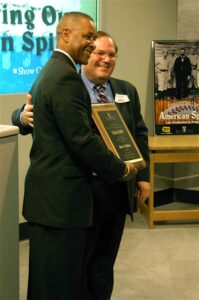 Roy Weaver presents award to Ozzie Smith
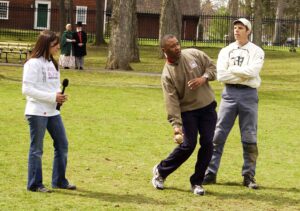 Ozzie Smith and New York Mutuals Eric Miklich on camera
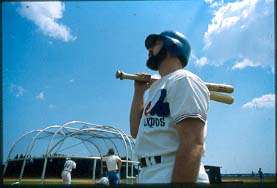 Hank Nuwer
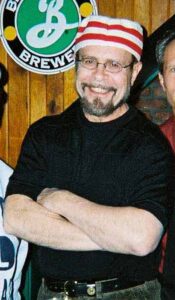 Hank Nuwer, New York Mutuals exhibition, Cooperstown, NY
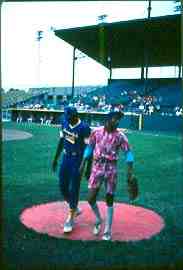 Indianapolis Clowns at Cedar Rapids, Iowa.
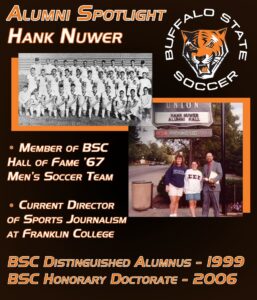
- The “Cup of Coffee” Club : He has written extensive profiles detailing the lives of historic players who made brief, single-game appearances in Major League Baseball, such as Tom Sullivan and Troy Levi Puckett . [1, 2]
- Personal Essays : In pieces like The Boy of Summer , he details growing up in Buffalo, NY, and how baseball literature fundamentally saved him from a life in the local steel mills by inspiring his love for writing. [1, 2]